Markham
Interlocking in Markham, from Cornell to Unionville
Markham is the city on our Google Business Profile, and its lots divide sharply by decade: builder subdivisions on one side, heritage village cores on the other.
Two housing eras in one city
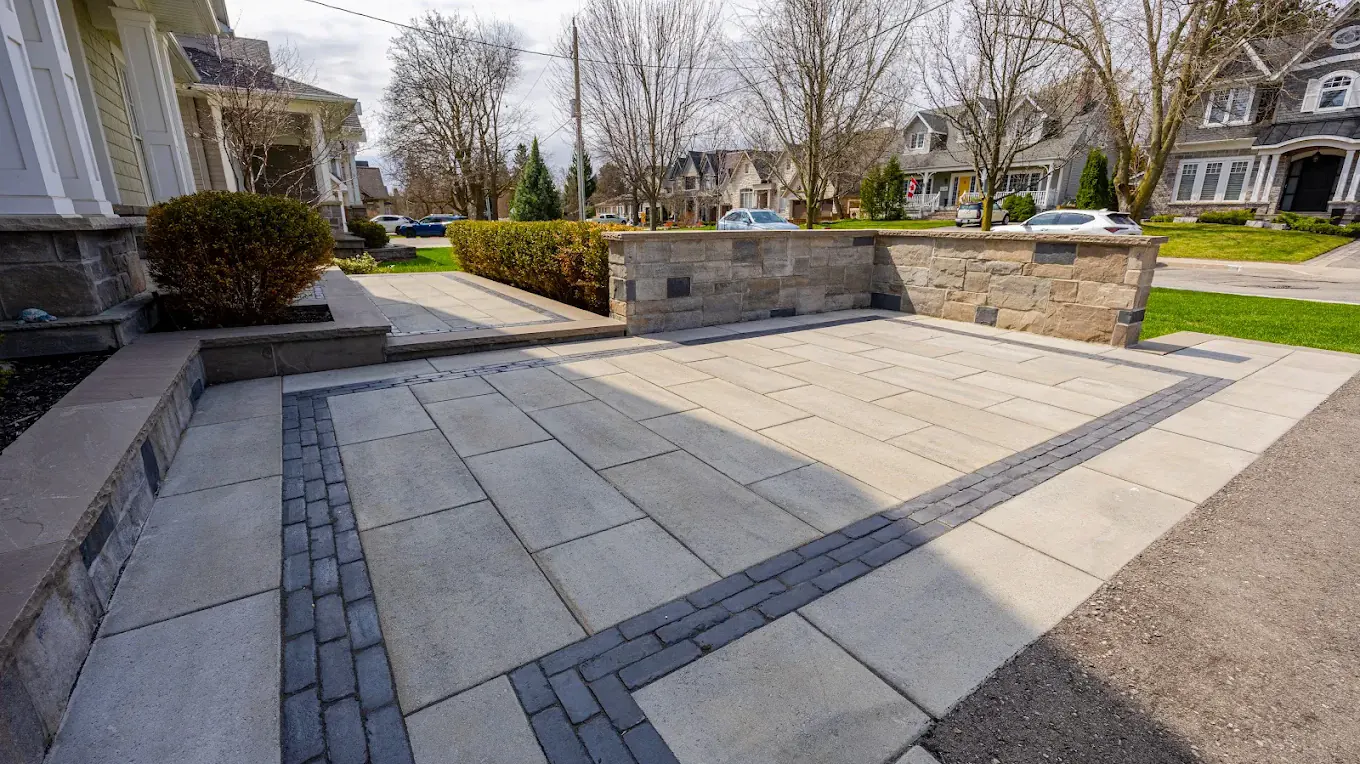
Interlocking work in Markham starts with the age of the house. Cornell, Berczy Village and Wismer were laid out with wide, repeating frontages and short setbacks between garage and sidewalk. Unionville, Markham Village and the east side of Thornhill carry older streetscapes, where a new driveway has to sit quietly beside its neighbours.
Within a subdivision phase, driveways went in within a season or two of each other. Builder-grade asphalt and concrete then age on much the same schedule along the block. When one owner replaces theirs with interlocking, the new surface becomes the reference point for the street.
Markham has heritage conservation districts in Unionville, Markham Village, Thornhill and Buttonville. Inside one, the city may review front-yard paving, walls and fencing before work goes ahead. Material, colour and border are worth choosing with that review in mind.
The Rouge River and its tributaries run through the city. Lots backing onto those valleys may fall within conservation authority regulated land, which bears on grading and walls near the slope far more than on a front driveway.
Backyards split the same way. A newer lot usually hands over a flat, fenced rectangle, which makes a patio or outdoor kitchen a clean design exercise. An older lot arrives with mature planting and a patio that settled years ago, so the work begins with what is there. Base, compaction and edge restraint belong to the interlocking hub and are not repeated here.
Local conditions
Where Markham projects differ
Short front setbacks
Garages close to the sidewalk leave little room for a walkway, a border or a turning flare.
Same-age driveways along a block
A phase built together tends to wear out together, so replacements arrive in clusters.
Heritage district review
In Unionville, Markham Village, Thornhill and Buttonville, front-yard changes can need heritage sign-off from the city.
Widening at the curb
The boulevard and curb belong to the city, so ask Markham what a wider apron requires before committing to one.
Rouge valley lots
Grading or walls near a valley slope may need conservation authority approval before the design is final.
Questions
Building in Markham, answered
Does widening a Markham driveway need city approval?
The part on your own lot and the part on the city boulevard are treated differently. Changing the apron where it meets the road, or cutting the curb wider, typically involves the City of Markham. Check the current requirements with the city before the layout is fixed.
Our subdivision driveway is failing. Repair or replace?
That turns on whether the problem is the surface or the ground under it. Isolated settlement can often be lifted and reset, while movement across the whole driveway points to the base. The driveway repair guide explains how to tell which one you have.
Can a contemporary paver work on a Unionville heritage street?
Possibly, but speak with the City of Markham heritage staff first, because front-yard materials can fall within their review. A restrained colour and a simple border usually sit better beside an older facade. Settle the material question before a layout is drawn.
Is all of Markham inside your service area?
Yes. Markham is one of the five municipalities we build in, and it is the city named on our Google Business Profile. The newer subdivisions and the older villages are both covered.
Go deeper
Services Markham lots call for most
Markham takes in the east half of Thornhill, and Richmond Hill runs along its western edge north of Highway 7. The full list sits on the service area page.